5 hours ago
Lucy Liu's Sapphic Art Emerges: The Actress-Artist Behind Erotic Lesbian Paintings
READ TIME: 4 MIN.
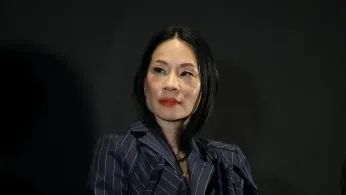
Lucy Liu is widely recognized as an Emmy-nominated actress with an illustrious career spanning decades, known for iconic roles in films and television series including "Ally McBeal", "Elementary", "Charlie's Angels", and "Kill Bill". However, what many members of the general public did not know until recently was that Liu maintains a parallel artistic practice as a visual artist, one that includes the creation of erotic paintings depicting women in intimate and sexual scenarios.
Liu began making art as a teenager, establishing herself in the visual arts long before her acting career reached prominence. Her first art exhibition occurred in 1993, presented under her Chinese name, Yu Ling. Her early artistic work included a photography series documenting a pro-choice march in Washington, DC, demonstrating that her creative output has historically engaged with social and political themes.
As Liu's artistic practice matured, she recognized the limitations of photography as her sole medium for self-expression. She expanded her artistic repertoire to encompass multiple mediums including sculpture, collages, embroidery, silkscreen printing, and the incorporation of found objects. Most prominently, Liu began creating large-scale paintings depicting women kissing and engaged in sexual intimacy.
These sapphic paintings represent a significant evolution in Liu's artistic expression, moving beyond documentation into the realm of intimate portraiture. The works have been characterized as erotic lesbian art and have attracted considerable attention from LGBTQ+ communities and art enthusiasts.
In discussing her artistic practice with "Artsy", Liu reflected on the deeper motivations underlying her work. As a first-generation immigrant, much of her artistic output has centered on themes of belonging and displacement. Liu explained her emotional connection to discarded objects and forgotten items, stating: "When I see something on the ground, I always feel badly for those items because they feel like they once had a purpose, once had a home, and they were no longer being utilised, they were disregarded. Something about that resonates with me."
This artistic philosophy extends to her sapphic paintings, which can be understood as expressions of visibility and reclamation—bringing attention to narratives and experiences that have historically been marginalized or overlooked in mainstream artistic and cultural discourse.
The recent visibility of Liu's sapphic artwork has generated significant engagement across social media platforms, particularly on X . The revelation prompted enthusiastic responses from LGBTQ+ communities and allies. One X user articulated the cultural moment, stating: "What a time to be gay and alive. " Another user humorously responded to the discovery with: "Where do I fall on the Kinsey scale? Somewhere between Whitney Houston's best friend's memoir and Lucy Liu's art."
The social media discourse demonstrates how Liu's artistic practice has resonated with audiences seeking representation and affirming cultural narratives. Comments such as "For Christmas I want Lucy Liu lesbian art" reflect the genuine appreciation and demand for her work within LGBTQ+ communities.
Throughout her career, Liu has maintained a notably private approach to her personal life while simultaneously engaging thoughtfully with questions regarding identity and sexuality. In 2015, Liu directly addressed speculation about her sexual orientation, offering a nuanced perspective on identity categorization.
Liu stated: "I think people sometimes get the wrong impression when they're like, 'Oh, well, so-and-so was straight, and then she was gay, and now she's straight again, 'you know? But it's like, how many times do I have to kiss a woman before I'm gay? Everybody wants to label people." She continued: "Sometimes you just fall in love with somebody, and you're really not thinking about what gender or whatever they happen to be. I think that if I happen to fall in love with a woman, everyone's going to make a big deal out of it. But if I happen to fall in love with a man, nobody cares."
These statements reflect Liu's resistance to rigid categorization and her advocacy for a more fluid understanding of human connection and attraction. Her artistic practice depicting sapphic intimacy can be contextualized within this broader philosophical stance regarding identity and authenticity.
Currently, Lucy Liu is single and maintains a notably private personal life. She is a single mother to her 9-year-old son, Rockwell, born in 2015 through gestational surrogacy. Liu has been vocal about her choice to use surrogacy and has expressed her commitment to raising awareness about diverse family structures.
Beyond her acting and visual art practices, Liu remains engaged in advocacy work, particularly regarding Asian-American representation and visibility. She has participated in events celebrating Asian-American, Native Hawaiian, and Pacific Islander heritage at the White House. This multifaceted engagement in representation and visibility extends across her professional endeavors, from her film and television roles to her visual art practice.
The emergence of Lucy Liu's sapphic artwork into broader public consciousness represents a significant moment in contemporary LGBTQ+ cultural discourse. It demonstrates how artistic expression can serve as a vehicle for exploring and affirming queer identities and experiences, particularly within the context of a career that has spanned multiple decades and mediums.
Liu's artistic practice challenges conventional narratives about celebrity, creativity, and identity. Her paintings exist outside the commercial entertainment industry that has defined much of her public persona, offering an intimate window into her creative vision and emotional landscape. The sapphic imagery in her work contributes to broader cultural conversations about representation, desire, and the visibility of queer women's experiences in artistic spaces.
For many within LGBTQ+ communities, Liu's artwork has provided a source of affirmation and cultural representation. The enthusiastic social media response underscores the continued hunger for authentic queer narratives and imagery, particularly from established cultural figures willing to engage meaningfully with these themes.