3 hours ago
Takeaways From Jack Smith on His Case Against Trump, 'So Many Witnesses' and the Threats Ahead
Lisa Mascaro, Mary Clare Jalonick, Alanna Durkin Richer and Eric Tucker READ TIME: 6 MIN.
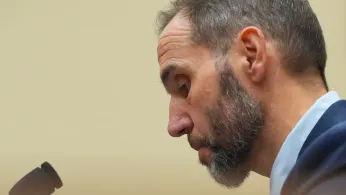
Former special counsel Jack Smith testified Thursday about his investigation of President Donald Trump's efforts to overturn the 2020 election, detailing how the defeated president “sought to prey” on his supporters and “looked for ways to stay in power,” culminating in the Jan. 6, 2021, Capitol attack.
It was Smith's first public hearing since he left the department last year, and the nearly five-hour session at the House Judiciary Committee delved into far-flung details — from former White House aide Cassidy Hutchinson's blockbuster testimony before the Jan. 6 committee to the gag order slapped on Trump during the investigation over his efforts to intimidate witnesses.
“Our investigation revealed that Donald Trump is the person who caused Jan. 6, it was foreseeable to him, and that he sought to exploit the violence,” Smith testified.
Trump, during the hearing, was live-posting his rage against Smith — suggesting the former career prosecutor should himself be prosecuted. In the room sat militant Oath Keepers founder Stewart Rhodes, and a tense encounter erupted between one audience member and police who had defended the Capitol, reminding how Jan. 6 still divides the Congress, and the country.
Smith said he believes Trump officials now will do “everything in their power” to prosecute him, but he said he would “not be intimidated” by attacks from the president, adding that investigators gathered proof that Trump committed “serious crimes.”
“I’m not going to pretend that didn’t happen because he’s threatening me,” Smith said.
Once Trump won reelection in 2024, Smith abandoned the cases against him, adhering to Justice Department protocol against prosecuting a sitting president. Trump faced a four-count indictment in the conspiracy to overthrow the election and, separately, Smith’s team indicted Trump over holding classified documents at his Mar-a-Lago home.
Throughout the session, Republicans highlighted new developments as they seek to sow doubt on Smith’s now defunct-case against Trump, while Democrats warned that Trump’s allies are trying to rewrite history after the defeated president sent his supporters to the Capitol to fight for his failed election against Democrat Joe Biden.
Far from done, Smith is expected to be called before the Senate, which is planning its own hearing, and he has been unable to discuss the documents case that lawmakers want to probe. Trump-appointed U.S. District Judge Aileen Cannon halted the release of a report by Smith’s team on that case with an injunction that is set to expire next month, but lawyers for Trump have asked to leave it permanently under seal.
Republicans have fixated for years on countering the gripping testimony that former White House aide Cassidy Hutchinson gave to the Jan. 6 committee, trying to prove her wrong.
The young aide recounted having been told that day about Trump lunging for the steering wheel in the presidential limousine as he demanded to join supporters at the Capitol. It’s a story that others said did not happen.
“Mr. Smith, is Cassidy Hutchinson a liar?” asked Republican Rep. Jim Jordan of Ohio, the committee chairman.
Smith explained that Hutchinson’s testimony was “second hand,” and as his team interviewed other witnesses, and the Secret Service agent in the car at the time “did not confirm what happened.”
Jordan pressed whether Smith would have brought Hutchinson forward to testify anyway, and Smith said he had not made “any final determinations.”
Smith said, “We had a large choice of witnesses.”
“That says it all,” Jordan declared. “You were still considering putting her on the witness stand because you had to get President Trump.”
In fact, Smith said, one of the “central challenges” of the case was to present it in a concise way, “because we did have so many witnesses” — state officials, Trump campaign workers and advisers — to testify.
“Some of the most powerful witnesses were witnesses who, in fact, were fellow Republicans who had voted for Donald Trump, who had campaigned for him and who wanted him to win the election,” Smith said.
A career prosecutor who worked for Republican and Democratic administrations, and worked on a range of cases, including war crimes overseas, Smith has presented himself as a straight arrow whose work stands for itself.
“I am not a politician and I have no partisan loyalties,” Smith said. “Throughout my public service, my approach has always been the same — follow the facts and the law without fear or favor.”
Republicans sought to portray Smith as a hard-charging prosecutor who had to be “reined in” by higher-ups as he pursued Trump ahead of the former president’s possible run for a second term.
They singled out the collecting of phone toll records of members of Congress, including the House speaker at the time, former GOP Rep. Kevin McCarthy.
During one particularly sharp exchange, Republican Rep. Brandon Gill of Texas said Smith used nondisclosure agreements to “hide” subpoenas from the subjects, and the public.
Smith explained that collecting the phone records was a “common practice” and investigators wanted to understand the “scope of the conspiracy” to overturn the 2020 election.
“My office didn’t spy on anyone,” he said.
Smith said he sought the nondisclosure agreements because of witness intimidation in the case. He cited Trump’s comments at the time, particularly the warning that he would be “coming after” those who cross him.
“I had grave concerns about obstruction of justice in this investigation, specifically with regards to Donald Trump,” he said.
Smith said it’s not incumbent on a prosecutor “to wait until someone gets killed before they move for an order to protect the proceedings.”
One Democrat, Rep. Pramila Jayapal of Washington, asked how he would describe the toll on American democracy if the nation does not hold a president accountable for fraudulent actions, particularly in elections
“If we do not hold the most powerful people in our society to the same standards, the rule of law, it can be catastrophic,” he said.
“It can endanger our election process, it can endanger election workers and ultimately, our democracy.”
“The attack on this Capitol on Jan. 6,” Smith said, echoing an appeals court ruling, “it was an attack on the structure of our democracy.”
Democratic Rep. Joe Neguse of Colorado asked Smith if he was aware that Trump was live-posting social media comments during the hearing.
“No,” Smith said.
The congressman began reading what the president had posted.
“'Jack Smith is a deranged animal, who shouldn’t be allowed to practice Law,'” Neguse read. “'Hopefully the Attorney General is looking at what he’s done.’”
Smith looked on.
“We have a word for this,” the congressman said. “It’s called weaponization. It’s called corruption.”
Democrats repeatedly asked if Smith had ever been approached by Biden’s Justice Department to investigate or prosecute Trump. Smith said he had not.
Smith presented his case against Trump, publicly and in previous private testimony, in ways that have not wavered.
“President Trump was charged because the evidence established that he willfully broke the law,” Smith said in opening remarks.
“Rather than accept his defeat in the 2020 election, President Trump engaged in a criminal scheme to overturn the results and prevent the lawful transfer of power.”
Smith said, “If asked whether to prosecute a former president based on the same facts today, I would do so.”
“No one should be above the law in this country.”
Still, the special counsel said he stopped short of filing a charge of insurrection against Trump. That was pursued in the House impeachment of Trump in the aftermath of Jan. 6, though the president was acquitted of the sole count of incitement of an insurrection by the Senate.
He said the case had “proof beyond a reasonable doubt that President Trump engaged in criminal activity,” and remained confident had it gone to trial.
Asked about Trump’s decision to pardon some 1,500 people convicted in the Jan. 6 attack, including those who assaulted police officers, Smith had almost no answer.
“I don't get it,” he said. “I never will.”